
Mobile App Development — iOS and Android, native or cross-platform
React Native and Swift / Kotlin apps shipped to the App Store and Play Store, with the offline, push, and release-pipeline work that actually keeps them live.
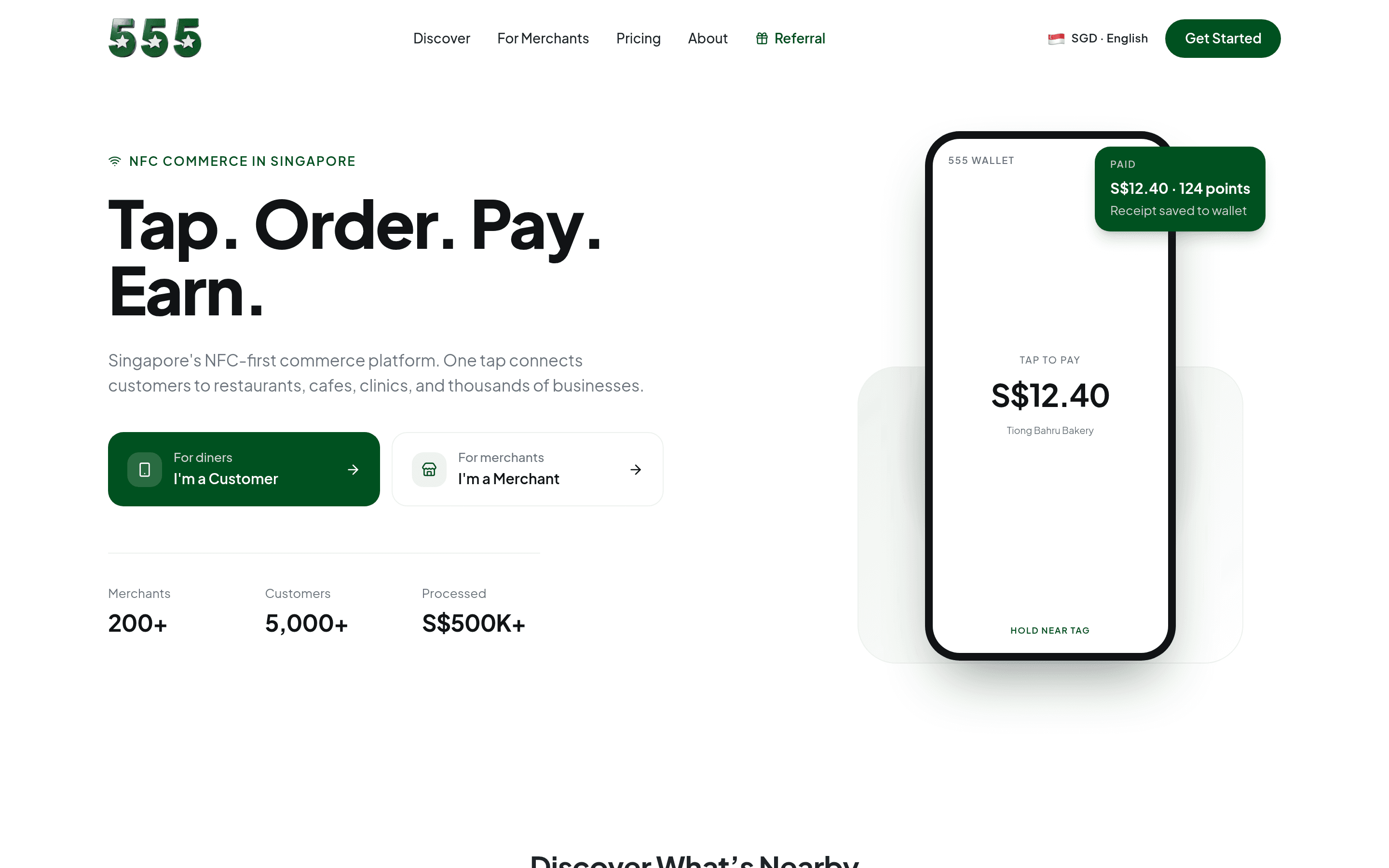
Most mobile apps don't fail because the screens were ugly — they fail because the offline sync was broken, the push pipeline got blocked, the release cadence stalled at six weeks per build, or the App Store review process kept catching things the team hadn't budgeted for. We build mobile apps end-to-end: React Native for cross-platform when it's the right call, native Swift or Kotlin when the UX or performance demands it. Push notifications wired correctly (APNs and FCM), offline-first data sync where the use case needs it, biometric auth, in-app purchase, deep links, App Store and Play Store submission, TestFlight and internal-testing tracks, and a release pipeline that lets you ship weekly without manual button-pushing. We've shipped a native React Native companion app as part of [555 Group](/work/555-group), and we work with founders who want a mobile app that's a real product surface — not a thin shell over a website.
About this service
Cross-platform or native?
We'll tell you which one your app actually needs
React Native covers ~80% of the apps we ship. It's fast enough for almost any product surface, shares code with a Next.js web build cleanly, and the release pipeline is genuinely good. The 20% that need native are: games and graphics-heavy apps, anything depending on a brand-new OS feature within weeks of release, deep camera/AR work, or watchOS/widget surfaces.
We'll be honest on the call. Many React Native projects we ship would have been twice as expensive in native with no user-visible upside.
The non-product engineering
The work that nobody budgets for
Roughly 30% of a mobile build isn't the product screens — it's the supporting infrastructure: APNs/FCM certificates and routing, deep links and universal links, App Store and Play Store metadata + screenshots + privacy nutrition labels, EAS Build or Fastlane release pipeline, beta testing tracks, in-app purchase wiring (StoreKit/Play Billing), App Tracking Transparency, and the inevitable App Store rejection cycle.
We build all of that in by default. The first build that lands in TestFlight or Play Console is a real release candidate, not a tech demo.
Web companion
Mobile + web from one codebase, where it fits
When the app and the web product share a meaningful amount of logic, we structure the codebase so a React Native app and a Next.js web surface share types, API clients, and feature logic. That's how we built the 555 Group companion app — same backend, different UX, shared domain layer.
If the mobile app is the only surface, we'll often still set up a thin Next.js admin/marketing site as part of the build — see SaaS Development — because you'll need it for App Store listing requirements anyway.
Real mobile app development patterns we’ve shipped
Not adjectives. Specific shapes of build we’ve taken to production for clients like you.
Marketplace companion app
React Native app pairing with a web marketplace, native push for new orders, offline cache, native checkout via In-App Purchase or [Stripe](/services/stripe-integration).
Field-worker app
Distributed-team app with offline-first sync, photo upload pipeline, GPS-aware check-in, manager dashboard on web.
Habit / streak / fitness tracker
Daily streaks, HealthKit / Google Fit integration, local push reminders, on-device analytics — privacy-friendly by default.
B2B SaaS mobile companion
Mobile-first surface for the most-used flows of a [SaaS product](/services/saas-development): approvals, notifications, urgent actions. Not the whole product — the part that needs to be in someone's pocket.
Social / community app
Feeds, profiles, push for replies and follows, content moderation pipeline, App Tracking Transparency-compliant analytics.
Booking / scheduling app
Calendar UI, calendar sync (Google / Apple), payment via In-App Purchase or [Stripe](/services/stripe-integration), reminders, no-show handling.
Game (light to mid-complexity)
Casual or hyper-casual game built on Unity, with leaderboards, achievements, in-app purchase, and a content pipeline you can update without resubmitting. See [Game Development](/services/game-development).
AI-powered mobile assistant
An [AI agent](/services/ai-agent-development) packaged as a mobile app — voice in, voice out, streaming responses, on-device fallbacks for low connectivity.
How a Mobile App Development engagement actually runs
Five concrete steps with deliverables. No retainer fog.
Platform + stack decision
We pick React Native vs. native per platform, agree on the offline model (online-only, cache-first, offline-first), and lock the design system. Output: a written platform plan.
Foundation sprint
Auth, push notifications wired end-to-end (APNs + FCM), deep links, navigation skeleton, and the EAS Build or Fastlane release pipeline. Beta build in TestFlight / Play Console by end of week 2.
Core product surface
Weekly TestFlight / Play Console drops of the actual product screens. Real device testing on a matrix of iPhone SE through Pro Max and a budget Android device — not just simulators.
Store-ready hardening
App Store / Play Store metadata, screenshots, privacy nutrition labels, App Tracking Transparency, in-app purchase wiring, crash reporting, and the rejection-cycle buffer.
Submission + 30-day support
Store submission (with us as the submitter or your account, your choice), rejection-cycle handling, public launch, then 30 days of bug-fix support while you take ownership.
Real brackets, no surprise invoices
Starting points. Exact quote on the scoping call — written, fixed, no hourly surprises.
Mobile MVP
Single platform, 5–7 weeks
- iOS or Android (React Native)
- Auth + push + deep links
- Up to 8 core screens
- TestFlight or internal track
- 30 days support
Production App
iOS + Android, 9–14 weeks
- React Native (both platforms)
- Offline-first sync layer
- In-app purchase or Stripe
- Full store submission
- Web admin / marketing site
- 60 days support
App Retainer
Bi-weekly releases on retainer
- Bi-weekly TestFlight / Play drops
- OS-update tracking
- Store-rejection response
- Crash + performance work
Things real buyers ask before paying
If yours isn’t here, ask on the scoping call.
Often shipped alongside this
SaaS Development
Production-ready SaaS platforms with auth, billing, and a real operator dashboard from day one.
MVP Development
Fixed-scope MVP builds for founders — auth, payments, the one feature that matters, in production, in six weeks.
API Integration Services
Bidirectional, idempotent integrations between your CRM, billing, comms, and product — built to survive retries, schema drift, and outages.
Real builds in production
Ready to scope a Mobile App Development build?
60-second AI consult and you’ll leave with a written plan. Prefer humans? Drop a custom quote request — we reply within a working day.