
SaaS Development — multi-tenant products built to scale
Production-ready SaaS platforms with auth, billing, and a real operator dashboard from day one.
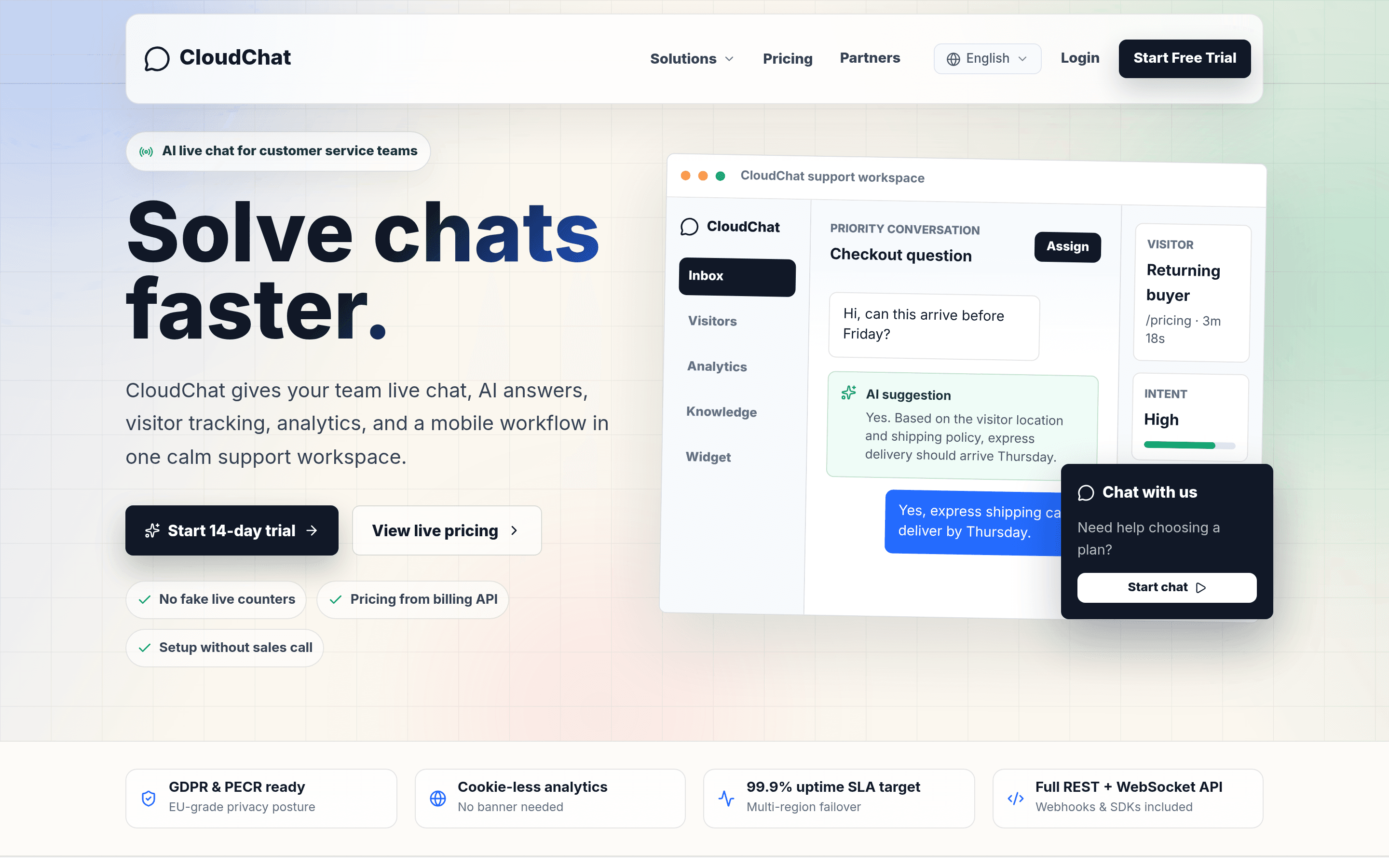
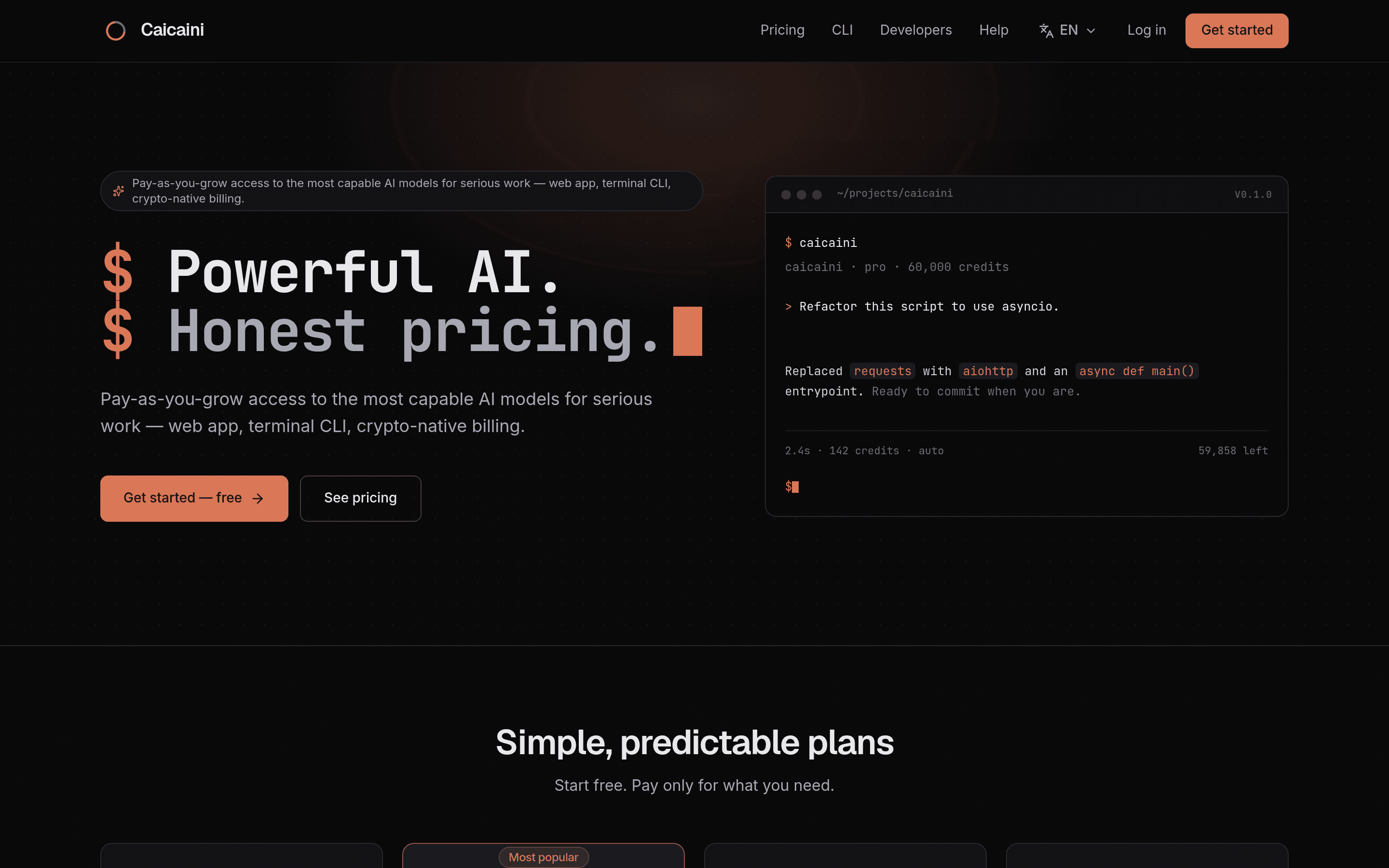
Most SaaS builds get stuck the same way: founders ship the marketing site, hack together a half-working dashboard, and then spend nine months bolting on auth, billing, and tenancy after the fact. By the time the first paying customer signs up, the codebase already needs a rewrite. We build SaaS differently. From day one we ship a multi-tenant foundation that handles auth, organizations, roles, audit logs, metered billing, and an operator surface — so the product team can focus on the feature that actually differentiates the business. We've taken real SaaS products to production this way: [CloudChat](/work/cloudchat) (embeddable customer-support widget + dashboard), [Caicaini](/work/caicaini) (consumer SaaS on a tight perf budget), and others — and the same patterns power every engagement. If you're a non-technical founder looking for a build partner, or a funded team that needs senior engineers to ship the first three releases without recruiting in-house, this is what we do. We move in tight scopes (4–12 weeks per release), write code your team can read after we leave, and we don't sell you frameworks — we sell you a working product.
About this service
What we mean by SaaS
Not just "a web app with a login"
A real SaaS product has more moving parts than most teams budget for. There's the product surface customers see, but underneath it there's tenant isolation, role-based access, billing that survives plan changes mid-cycle, webhooks for customer integrations, an admin surface for your own ops team, audit logs you'll need the moment SOC2 comes up, and a usage-metering pipeline if you're charging by anything other than seat count.
We treat all of that as the floor, not the ceiling. The MVP we ship to your first paying customer already has those pieces wired up — not as TODOs in a Notion doc, but as code in production. That's the difference between a SaaS that grows and a SaaS that hits 50 customers and falls over.
Who this is for
Founders, funded teams, and product leads who want senior engineers
We typically work with three kinds of buyers. First, non-technical founders who have validated a market and need a build partner who can also push back on bad product decisions. Second, funded startups whose in-house engineering team is heads-down on the core product and needs a separate squad to ship an adjacent surface. Third, product leads inside larger organisations who need a SaaS bolt-on to an existing product line.
What we don't do: open-ended retainers with no defined scope, hourly billing that punishes the customer for our learning curve, or rewrites that should have been incremental refactors. If you don't need our specific stack, we'll tell you. If you should hire a junior in-house, we'll tell you that too.
Why teams pick us
Senior engineering, real case studies, owned code
Every line we write is yours. No license-locked components, no internal frameworks you can't read, no 'platform fee' that scales with your revenue. You get the code, the deploy pipeline, the database, the secrets — and if you decide to take it in-house after launch, we hand it over cleanly and walk away.
If you want to see what that actually looks like in production, read the CloudChat case study — multi-tenant SaaS with realtime WebSockets, Stripe Billing, and a 4 KB embeddable loader script. It's still live, still ours, and the team has the code on their own GitHub.
Real saas development patterns we’ve shipped
Not adjectives. Specific shapes of build we’ve taken to production for clients like you.
Stripe-metered AI SaaS
Per-token or per-call usage metering on top of Stripe Billing, with overage handling, plan migration, and an in-app usage dashboard for end customers.
Notion-style block editor product
Tiptap or ProseMirror block editor, realtime collaborative cursors, document permissions, and a shareable public read mode.
Cal.com alternative with multi-tenant routing
Scheduling SaaS with team round-robin, custom domains per tenant, calendar two-way sync, and embeddable booking widgets for the customer's marketing site.
Vertical CRM (industry-specific)
Replacement for HubSpot/Pipedrive in a narrow industry — custom pipeline stages, sector-specific automations, and integrations the generic tools don't ship.
Operator + customer dual-surface SaaS
Like [CloudChat](/work/cloudchat) — one app for your end customers, a second app for your customers' internal teams, sharing one backend and one billing surface.
Embeddable widget SaaS
A small loader script your customers paste onto their own sites, hydrating a chat, form, review widget, or checkout — billed per active host domain.
Internal-tool replacement for spreadsheets
Companies running their business on a Google Sheet that's started corrupting under load — we replace it with a real app, keeping the spreadsheet UX the team is used to.
Open-source-as-a-service
Take an open-source project that's painful to self-host (Cal.com, Plausible, Supabase) and wrap it as a managed SaaS for a specific buyer segment.
How a SaaS Development engagement actually runs
Five concrete steps with deliverables. No retainer fog.
Scoping & technical plan
We run a 90-minute working session, map your user journeys to data models, and produce a written technical plan: routes, schemas, third-party services, deploy targets, and a release schedule with milestones. You walk away with a doc you can hand to any engineer.
Foundation sprint (week 1–2)
Auth, multi-tenant organisations, role-based access, the marketing surface, and the deploy pipeline (preview branches, staging, prod). We move fast here because we've shipped this floor a dozen times — it's not the interesting work, it's the work that has to be right.
Core product (week 3–8)
Weekly releases of the actual product feature your customers care about. Every Friday you get a deployed preview, a Loom walkthrough, and a written changelog. No surprises at the end.
Billing + admin + observability (week 8–10)
Stripe Billing wired to your real pricing model, an internal admin surface for your ops team (refunds, impersonation, audit log), and the monitoring/alerting setup that wakes someone up if production breaks.
Launch + 30-day handover
Public launch, then 30 days of bug-fix-only support while you take ownership. We document the codebase, run a handover session with your in-house team (or your next contractor), and step out cleanly.
Real brackets, no surprise invoices
Starting points. Exact quote on the scoping call — written, fixed, no hourly surprises.
Starter MVP
Fixed-scope MVP, 4–6 weeks
- Auth, single-tenant, Stripe checkout
- One core product surface
- Marketing site + 5 SEO pages
- Deploy pipeline + staging
- 30 days of bug-fix support
Pro SaaS Build
Multi-tenant, billing-ready, 8–14 weeks
- Multi-tenant organisations + roles
- Stripe Billing or metered usage
- Operator/admin dashboard
- Webhooks + public API
- Audit logs + observability
- Weekly demo + 60 days support
Scale Retainer
Dedicated senior squad, monthly
- Dedicated tech lead + 1–2 engineers
- Bi-weekly release cadence
- Performance + cost optimisation
- SOC2-ready hardening
- On-call rota for incidents
Things real buyers ask before paying
If yours isn’t here, ask on the scoping call.
Often shipped alongside this
MVP Development
Fixed-scope MVP builds for founders — auth, payments, the one feature that matters, in production, in six weeks.
API Integration Services
Bidirectional, idempotent integrations between your CRM, billing, comms, and product — built to survive retries, schema drift, and outages.
Stripe Integration
Production-grade Stripe wiring — Checkout, Billing, Connect, Tax, and Radar — with the webhook reliability that keeps the books straight.
Real builds in production
Ready to scope a SaaS Development build?
60-second AI consult and you’ll leave with a written plan. Prefer humans? Drop a custom quote request — we reply within a working day.